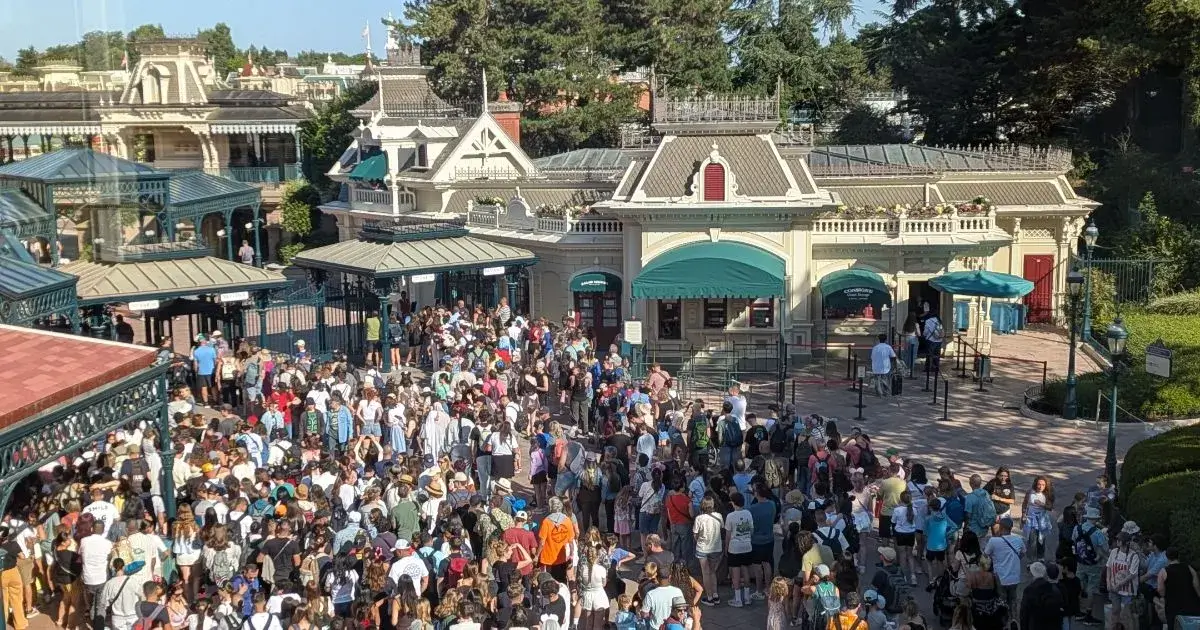
If you’ve been a Disney travel agent for a while, you probably had your routines dialled in: which park to rope-drop, which ride to prioritise before 10 AM, which month to dodge the summer chaos. Well, 2026 changes almost all of it.
The transformation of the former Walt Disney Studios into Disney Adventure World isn’t a cosmetic refresh. It’s, without exaggeration, the biggest operational shift in Disneyland Paris history. More surface area, more high-demand attractions, new visitor flows, and with all of that, new rules for those of you who build real itineraries.
This article isn’t for the tourist who shows up with the kids and wings it. It’s for the professionals who need to understand the logic behind the queues before sitting down with a client.
The End of the “Half-Day Park”
For years, one of the most repeated agent strategies was clear: use Extra Magic Hours at the Studios first thing and, once you’d burned through it, hop over to Disneyland Park for the afternoon and evening. It was a scheme that worked precisely because Studios was compact with a limited offering.
In 2026, that approach no longer holds.
With the opening of World of Frozen and Adventure Bay, Disney Adventure World has nearly doubled its footprint and added a dozen new dining locations, a nighttime lake show, and several top-tier attractions. We’re talking about a park that demands a full day, if not more if you want to do it justice.
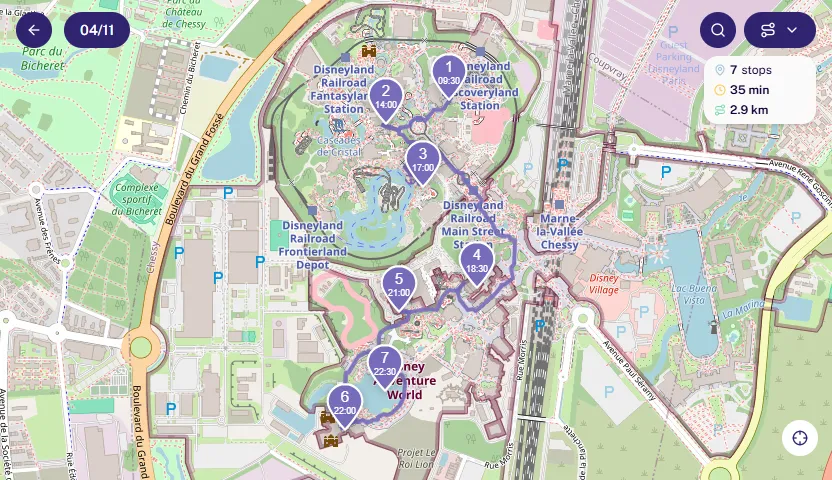
The real challenge for agents: the physical distance between Avengers Campus and World of Frozen turns rope drop into a genuine strategic decision. Crossing the park during the first two opening hours, when wait times are still low, can cost precious minutes. A poorly designed itinerary can make your client miss exactly the golden window you worked so hard to explain to them.
The Attractions Reshaping Visitor Flow
Understanding what’s saturated and what isn’t is the core of an agent’s job in 2026. Here’s what matters:
Crush’s Coaster: the bottleneck that won’t go away
Despite all the new additions, Crush’s Coaster remains the hardest capacity problem in the resort. Its hourly throughput is structurally limited and the new attractions haven’t eased the pressure: visitors arriving at the park still have it on their list and head for it from opening.
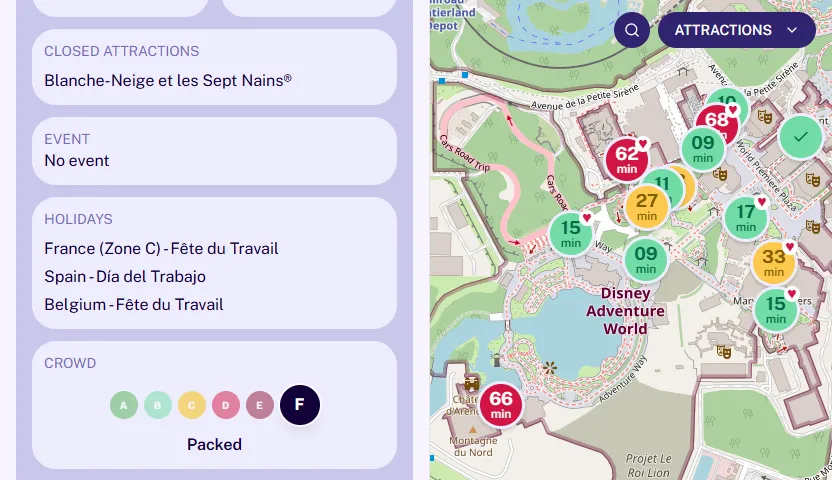
From the historical data we monitor at MagicWait Paris, Crush’s most consistent peak hits around 11 AM. However, there is a relief window few visitors take advantage of: from 9 PM onward, when part of the crowd shifts toward the lake area for the nighttime show, wait times drop noticeably. It’s a small data point, but in an eight-hour itinerary, that kind of insight is worth half a day.
Frozen Ever After: the new high-pressure headliner
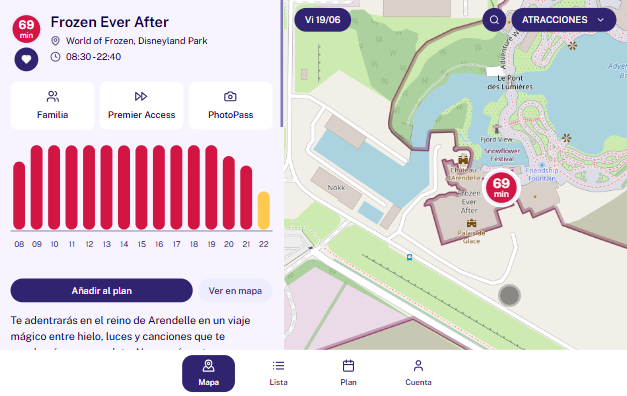
Frozen Ever After has instantly become one of the most in-demand attractions in the resort. Queues are massive from opening to close and, unlike Crush, there’s still no clear stabilised “low window” pattern. The data from the first months of operation confirms this.
For your clients, the recommendation is clear: Frozen Ever After must be the first stop if the itinerary starts in Adventure World. No exceptions.
🎯 Build itineraries backed by real data, not guesswork. With Magic Wait Paris you access two years of ride wait time history, identify patterns by day and hour, and prepare plans your clients will thank you for. Try it free.
Ratatouille: an underrated opportunity
Here’s some good news. The flow redistribution toward the lake area has created an interesting side effect: Ratatouille is seeing afternoon lulls that were unusual just a few years ago. If your client has a well-structured morning itinerary, the afternoon is now a surprisingly comfortable time for this ride.
Dining: the Silent Problem That Ruins Meal Plans
There’s a topic experienced agents know well but newer ones discover the hard way: Disneyland Paris restaurants don’t always operate at full capacity. Depending on crowd levels, some venues open partially or don’t open at all.
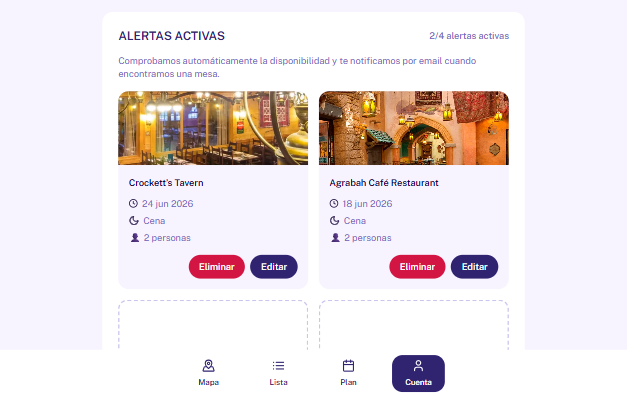
This is especially critical if your client has a Premium Meal Plan. Getting a table at places like Auberge de Cendrillon now requires precision planning that goes well beyond making an online reservation. Booking windows are opening earlier, meaning tables fill up months in advance. As the date approaches, many of those tables free up.
That’s where MagicWait Paris’s restaurant availability alert system becomes useful.
From Agent to Data Consultant: the Role Shift Already Happening
Disney’s dynamic pricing model has transformed the value equation you offer. Waiting for a last-minute deal is, in nearly every case, a losing strategy: prices tend to rise as the date approaches, not fall.
But the bigger shift isn’t about pricing. It’s about approach.
Your best clients don’t come to you to buy a ticket. They come because they trust you’ll give them something they can’t get on their own: a plan that actually works. And that, today, requires data.
Tools like MagicWait Paris let you visualise the hourly evolution of wait times with two years of history, identify crowd patterns by week and by ride, and build itineraries based on real visitor behaviour, not estimates. The difference between a standard itinerary and a premium one isn’t the paper it’s printed on. It’s whether the data behind it is real or approximate.
When a client tells you “we booked a Disney holiday with another agency last year and it was a disaster”, there’s almost always a story of avoidable queues behind it. Every 2.5 hours your client gets back from standing in line is time spent riding something, eating in peace, or watching their kids smile. And that’s what makes them come back to you.
🎯 Differentiate yourself with data no search engine can offer. With Magic Wait Paris you turn every itinerary into a genuine value proposition: historical wait times, weekly crowd patterns, and restaurant alerts. Tools built for agents who want to play in a different league.
In Summary: the New Rules for 2026
- Disney Adventure World is now a full-day park. Rethink every itinerary that treated it as a secondary visit.
- Frozen Ever After first, or right before close. It’s the new maximum-pressure ride and there’s no clear relief window yet.
- Crush’s Coaster has a 9 PM relief window. Keep it as an exclusive data point for your clients.
- Dining operates based on crowd levels. Premium meal plans need low-grade weeks to avoid frustration.
- The client who values you most is the one who knows there’s real data behind their itinerary. That’s the edge no search engine can offer.