
There’s a question we get asked a lot by people who follow us and who all have something in common: they’ve spent years organising Disneyland Paris trips for friends and family, everyone tells them they should charge for it, and at some point they wonder whether it could become a real business.
The answer is yes. And 2026 is quite possibly the best time to start.
This article isn’t written for the average traveller. It’s written for anyone considering making the professional leap and wanting to understand exactly what it involves, what you need, and above all, what separates a run-of-the-mill agent from one who builds a rock-solid reputation.
First, an Important Clarification: You’re Not a Disney Employee
One of the most common misunderstandings when researching this path is thinking that “Disney agent” means working for the company. It doesn’t.
A Disney-specialised travel agent is an independent professional (or one linked to an agency) who has trained in Disney products and handles planning and booking experiences for their clients. Disney doesn’t hire you, but they do recognise you, train you, and pay you commission on every booking you manage.
Your real job is something else: navigating a labyrinth of options that, for Disneyland Paris in 2026, includes two sizeable parks, seven official hotels with different categories and perks, meal plans, dynamic pricing, and a transformation of the second park that has completely rewritten the planning rules. For someone without deep knowledge, that labyrinth is overwhelming. For you, it’s your value proposition.
The Income Model: How and When a Disney Agent Gets Paid
Before talking about training or tools, it’s worth understanding the financial mechanics, because they have some quirks that make the difference between those who thrive and those who drop out in the first few months.
Commissions. Disney pays a base commission of around 10% on packages that include hotel and multi-day tickets. That’s the core of any specialised agent’s income model.
The split with the host agency. Most new agents don’t operate fully independently from day one. Instead, they work under the umbrella of a “host” agency that already has the contracts and accreditations sorted. In that model, the commission is split: the agent typically keeps between 50% and 90%, depending on the agreement and accumulated experience.
Deferred payment. This is the point that catches most newcomers off guard: Disney pays the commission after the client has completed their trip, not at the time of booking. This means that if a client books in January for an August trip, you don’t get paid until September. Anyone who doesn’t manage this cash-flow calendar well spends their first months with more work than seems sustainable.
Understanding this mechanic from the start lets you design a realistic business model: how many clients you need to manage in parallel, when it starts becoming profitable, and what volume of bookings justifies doing it full-time.
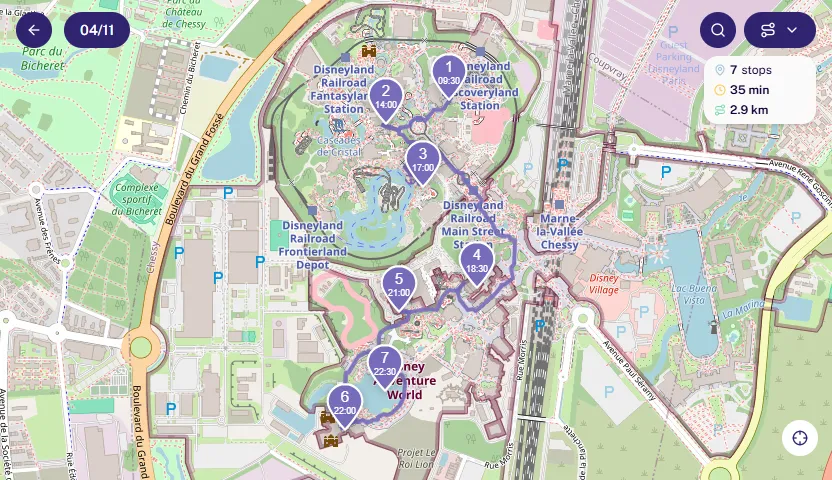
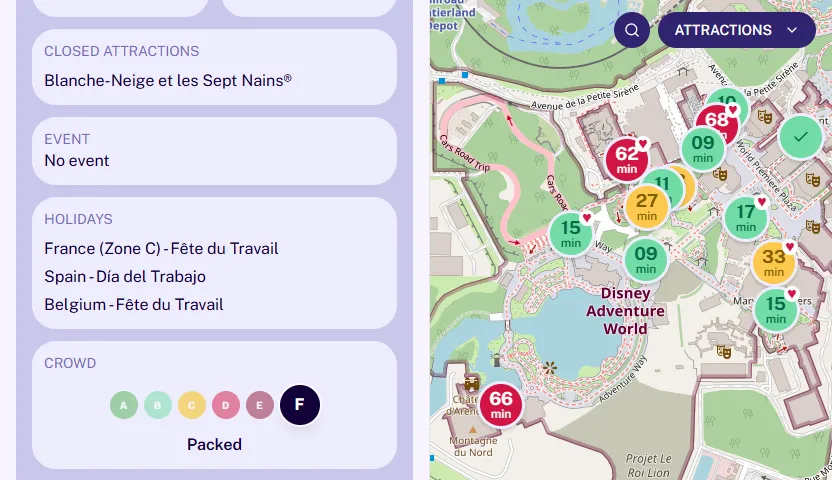
🎯 Start with an edge from day one. With Magic Wait Paris you access historical crowd and wait time data that lets you recommend dates and strategies with solid arguments, not guesswork. The difference between an agent who wings it and one who plans with data shows from the very first client conversation.
The Official Training: College of Disney Knowledge
The first formal step for any agent wanting to specialise in Disney destinations is graduating from the College of Disney Knowledge. It’s the official training programme from Disney Destinations, completely free and fully online, covering all Disney destinations: Disneyland Paris, Walt Disney World, Disney Cruise Line, Adventures by Disney, and Aulani in Hawaii.
How to access it: the step nobody tells you about
Here’s the detail many guides gloss over, and it causes confusion: you can’t register directly for the College of Disney Knowledge as an independent agent. Disney doesn’t accept individual sign-ups.
The real process works like this: first, you must join an authorised travel agency. Once you’re in, the agency creates your account on the official Disney Travel Agent (DTA) portal, which is the gateway to all Disney professional training and tools.
From that portal, the certification process follows these steps: interactive courses, videos, and presentations you complete at your own pace. Each destination has its own modules, and at the end of each block there’s a quiz you must pass to move forward. Once all modules are completed, you earn the title of College of Disney Knowledge Graduate, with an official certificate you can show clients as proof of your specialisation.
There’s an important detail: this certification is exclusive to industry professionals. It’s not available to the general public or to people not linked to an agency. This has a positive side effect for you: when you display it, it carries real weight.
Beyond the paper, the College offers something more valuable in the long run: access to updated materials, park news, and in many cases the chance to access familiarisation rates (so-called “fam trips”) so you can experience the product firsthand. An agent who has slept at Hotel New York - The Art of Marvel and had breakfast at Sequoia Lodge knows something no manual can teach.
Why Specialising in Disneyland Paris Makes More Sense Now Than Ever
The Disney agent market is broad, but specialising specifically in Disneyland Paris offers a concrete window of opportunity in 2026.
The transformation of the former Walt Disney Studios into Disney Adventure World has turned the second park into a full-day destination with the opening of World of Frozen, Adventure Bay, and a dining and entertainment offering that simply didn’t exist two years ago. The resort has grown substantially, and with it, the complexity of planning it well.
This has a direct consequence for agents: families who used to be able to figure things out on their own with a bit of internet research now face a park that requires real strategy. Which ride first? How many days are enough now there’s twice the content? How do you balance the new with the classics? Which week of the year is worth visiting so you don’t lose half your day in queues?
The agent who has concrete, well-founded answers to those questions has a clear competitive edge over someone who only knows how to handle the technical booking.
The Real Difference: from Ticket Seller to Experience Consultant
Here’s the core of this article, and the reason many agents stay stuck at a mediocre income level while others build profitable businesses with clients who come back every year.
Booking a stay at Disneyland Paris is something anyone can do on the official website in twenty minutes. If your value proposition boils down to that, you’re in a market where you compete on price and availability, and where Disney can do without you at any moment.
The agents who build a loyal client portfolio offer something different: judgement. They know not just what to book, but when, in what order to visit each area, which restaurant needs advance booking and which can be left for the day, which week of the year combines the best ticket price with reasonable crowd levels, and what opening strategy lets a family with two young children ride Frozen Ever After without waiting two hours.
That judgement is built through direct experience, constant monitoring of park news, and increasingly, through tools that let you work with real data instead of estimates. At MagicWait Paris, for instance, we track the hourly evolution of wait times with two years of history: that kind of information is what lets an agent recommend a specific week or a specific time slot with real arguments, not with “I think it’s usually quieter at that time.”
The difference between a standard itinerary and one a client remembers five years later isn’t the paper it’s printed on. It’s whether the data behind it is real.
Legal and Technical Requirements: What You Need to Get Started
The administrative side varies depending on which country you operate from, but there are some common points worth clarifying from the start.
Licences and registration. Depending on your country, operating as an independent travel agency or intermediary may require registration and in some cases specific licences. If you’ll be operating under an established host agency, many of these requirements are covered by the agency. Consult a legal professional about the most suitable structure for your situation before you start handling bookings commercially.
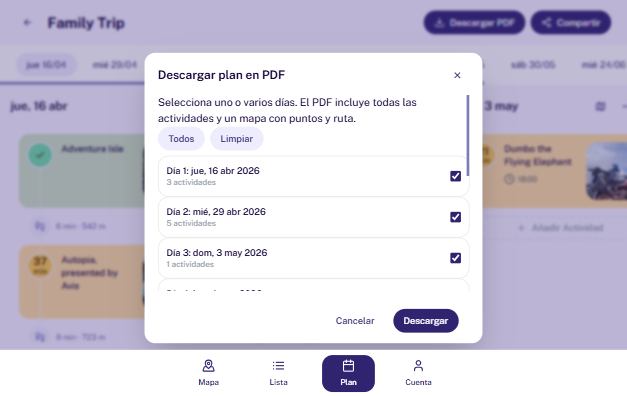
The minimum kit. The good news here: you don’t need an office, an expensive IT system, or upfront equipment. What you do need is a computer with a good connection, a basic CRM to manage client follow-ups and bookings (there are free or very affordable options designed for independent travel agents), and over time, a digital presence that builds trust: your own website or active social media profiles where your specialisation is obvious.
Social media presence. This point deserves its own paragraph. Disney agents who have built communities on Instagram, TikTok, or YouTube have a huge advantage over those who rely exclusively on word of mouth. You don’t need to be an influencer: you need to be the person people come to when they have a question about Disneyland Paris. Answering questions, sharing useful data, talking about park news: that builds authority faster than any ad.
🎯 Build your judgement with data, not instinct. With Magic Wait Paris you access crowd history, per-ride wait times, and the A-F grade calendar. The tool that lets you back up every recommendation with real information. Try it free.
The First Year: Realistic Expectations
Graduating from the College of Disney Knowledge doesn’t automatically turn you into a profitable business. For most people, the first year is a period of hands-on learning: the first clients tend to be acquaintances, commissions are modest, and ongoing training time is high.
But it’s also the year the foundations are laid. A client well looked after on their first family trip to Disneyland Paris can become a repeat client every two or three years, someone who recommends you in their school parents’ WhatsApp group, and a five-star review worth more than any advert.
Real specialisation in this sector is paid for with time and with visits to the product. The more times you set foot in the park, the better your judgement will be. And the better your judgement, the easier it is to justify charging for it.
Where to Start This Week
If you’ve made it this far and the answer is still yes, here are the concrete steps:
First, find an authorised host agency in your market and join it: that’s the prerequisite for accessing the Disney Travel Agent portal and, from there, the College of Disney Knowledge. Compare commission split terms, the support they offer, and the tools they make available to their agents.
Second, once you’re in, start the College of Disney Knowledge with the Disneyland Paris module. It’s free, self-paced, and you can complete it on your own schedule.
Third, start building judgement: follow Disneyland Paris news closely, use tools that give you access to historical crowd and attraction data, and if you can, plan a park visit before you start selling.
The market of families who want to experience Disneyland Paris properly, not just visit it, is enormous. And it’s, to a large extent, waiting for someone who can explain the difference to them.