
There’s a scene playing out more and more often in travel agencies, and it makes professionals break into a cold sweat. The client arrives at the first meeting with their homework done. They’ve built an itinerary with ChatGPT, read Reddit forums, follow three influencers on Instagram, and have the official app downloaded. They know which hotel they want, which restaurants they’ve seen on TikTok, and in what order they want to do the rides.
And then they look at you and drop the lethal line: “Should I book it through you, or am I better off just doing it myself on the website?”
If your only answer to that question is “I’ll handle the admin so you don’t have to worry”, you’re on the endangered list. Because managing a booking is something Disney has deliberately designed to be effortless. Any client can do it from their sofa in fifteen minutes.
The question in 2026 is no longer how to compete with Disney’s website. The question is what you can offer that the client can’t Google. And the answer isn’t information; it’s data intelligence.
🚫 The Real Problem: “Information” No Longer Has Value
There was a time when the Disney agent was the keeper of secrets. You knew things the client couldn’t find: which hotel was closest, which restaurant required a three-month advance booking, or which week was cheapest.
That time is dead. Today, information has been democratised.
A client who’s willing to do the research can end up knowing almost as much about the rides as an average agent. So what’s left for you? What no generic AI and no Facebook forum can offer: predictive judgement built on millions of real data points, not on “personal impressions.”
An agent who’s visited the park ten times has respectable judgement. But that judgement is just a sample of ten days across different years. An agent who works with two years of granular wait time history from MagicWait Paris has something infinitely superior: crowd behaviour patterns.
And patterns are what turn a simple “tip” into a bulletproof itinerary the client is willing to pay for.
📊 The Difference Between “Generic Advice” and “Surgical Data”
Let’s use a real example, because theories don’t close sales.
A client contacts you: “We’re travelling Tuesday, 23 September. Two adults, two children (6 and 9). We want to do Frozen Ever After, Crush’s Coaster, Ratatouille, and Peter Pan. How do we organise it?”
The Traditional Agent responds (without data): “I’d recommend sprinting to Frozen first since it’s new and has long queues. Then head to Crush, and leave Ratatouille for the afternoon.” It’s logical advice. And it’s exactly what the client has already read for free on twenty different blogs. You’re not adding value.
The “Magic Architect” responds (with MagicWait Paris data):
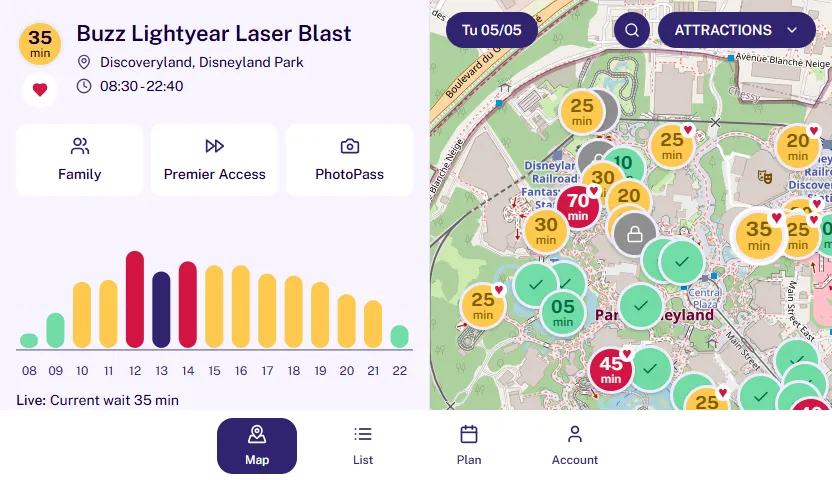
- “September 23rd is a low-season Tuesday. Historically, if you hit Frozen Ever After at 9:15 AM, you’ll ride in 35 minutes. If you get there at 11:00 AM, the algorithm says you’ll eat 90 minutes. Mandatory first stop.”
- “Don’t go to Crush’s Coaster in the morning. Two years of data show a brutal relief window on Tuesdays from 4:00 PM onward. Save it for then; it’ll drop from 75 to 40 minutes.”
- “For Peter Pan, we’ll use the Parade tactic. When Disney Stars on Parade kicks off at 5:30 PM, Fantasyland empties out. The historical data shows drops of up to 50% in wait times during those 30 minutes. That’s your moment to strike.”
That’s not advice. That’s a battle plan. It’s a surgical itinerary based on the park’s real behaviour. That’s something the client can’t replicate on their own, because Disney’s official app doesn’t predict the future.
🎯 The Ultimate “Elevator Pitch” to Close Your Client
If you want the client to instantly understand why they need to hire you, use this exact analogy at your next meeting:
“Disney’s official app tells you what the queue is right now. That’s great, but it forces you to improvise. I tell you how long you’ll wait at every ride, at every hour of your trip day, based on how the park has behaved in that same week over the last two years. The difference is the same as looking out the window to see if it’s raining now, versus checking the weather forecast to know exactly when the sun will come out. I’m your forecast.”
This line is lethal. The client processes it instantly. Nobody plans a barbecue by looking at the sky in that moment; they check the forecast. Why would they organise a €3,000 trip without the equivalent of that forecast?
⚙️ The Method: How to Package Your Data (Step by Step)
For the client to perceive your service as truly Premium, your workflow needs to be structured like this:
Step 1: The Energy Audit. Don’t just ask which rides they want. Ask how long the kids can walk before collapsing, or whether the teenagers get up early. The human data shapes the park data.
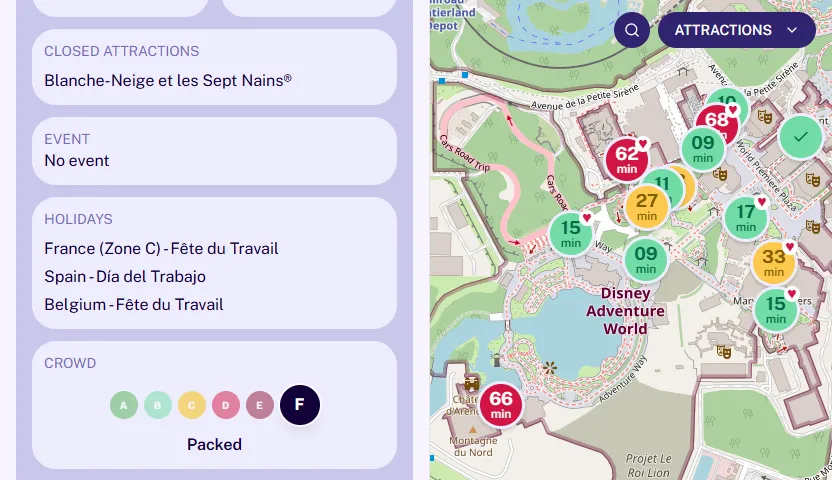
Step 2: The Predictive Scan. Open MagicWait Paris and check the crowd grade for their week. If it’s a “Grade E” day (maximum saturation), your client needs a surgical itinerary far more than on a “Grade A” day.
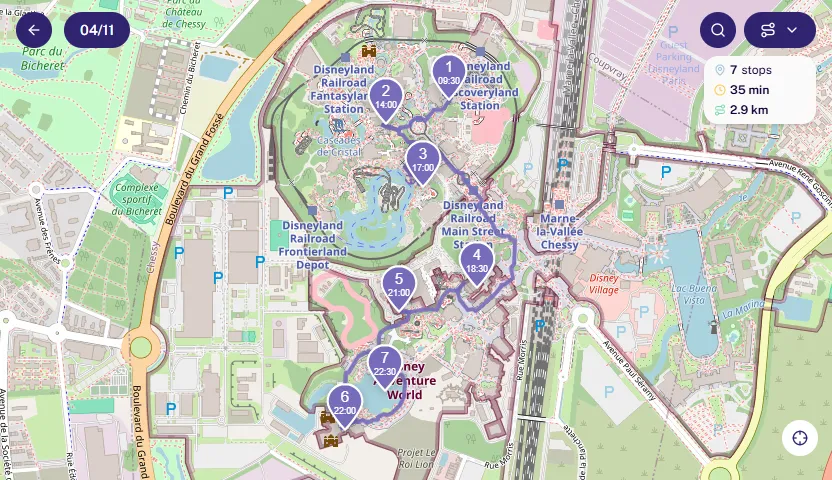
Step 3: Design by “Relief Windows.” Don’t order rides by geographic proximity. Order them by their historical time drops. If Ratatouille historically empties out at 2:00 PM because all the French people are eating lunch, at 2:00 PM your client needs to be at the ride entrance (having eaten at 1:00 PM).
Step 4: The Justified Delivery. Don’t send them a PDF with a list of rides. Send them the PDF explaining the WHY. When the client reads “We’re hitting Spider-Man at 7:00 PM because the data confirms families with children have already left that area”, their perception of your professionalism shoots into the stratosphere.
📊 Ready to stop guessing and start planning with the algorithm on your side? At Magic Wait Paris we give you access to predictive wait time history, hourly windows, and crowd grades for the entire resort. Become the agent who has answers, not assumptions. Try it free.
💎 Conclusion: The Architect Doesn’t Sell Bricks
A good architect doesn’t charge you for the bricks. They charge you for the blueprints that guarantee the roof won’t come crashing down. If you want, you can go to the hardware store yourself, buy the bricks, and try to build the house on your own. Good luck with that.
The 2026 client can buy their own tickets on the official website and book their hotel on Booking.com. What they can’t do is design the structural blueprint of their day to avoid losing 4 hours of their life standing in a queue.
You have the blueprints. You have the historical data. And that’s exactly the difference between being a replaceable “ticket dispenser” and being an absolutely indispensable Magic Strategist.